

Thematic Area
Food Security & Nutrition
Measuring household food security status and designing evidence-based nutrition interventions.
Research Focus
Key Research Questions
What household-level factors most strongly predict food insecurity in Uganda and across Africa?
How do seasonal price shocks and climate variability affect smallholder household dietary diversity?
Which interventions most effectively improve food security outcomes for vulnerable populations?
Why It Matters
Food insecurity affects millions of people across East Africa, driven by poverty, climate shocks, market failures, and poor dietary diversity. In Uganda, over 40% of children under five are stunted, and women's dietary diversity remains chronically low. Addressing food and nutrition insecurity requires integrated, evidence-based interventions across production, markets, social protection, and behaviour change.
Our Approach
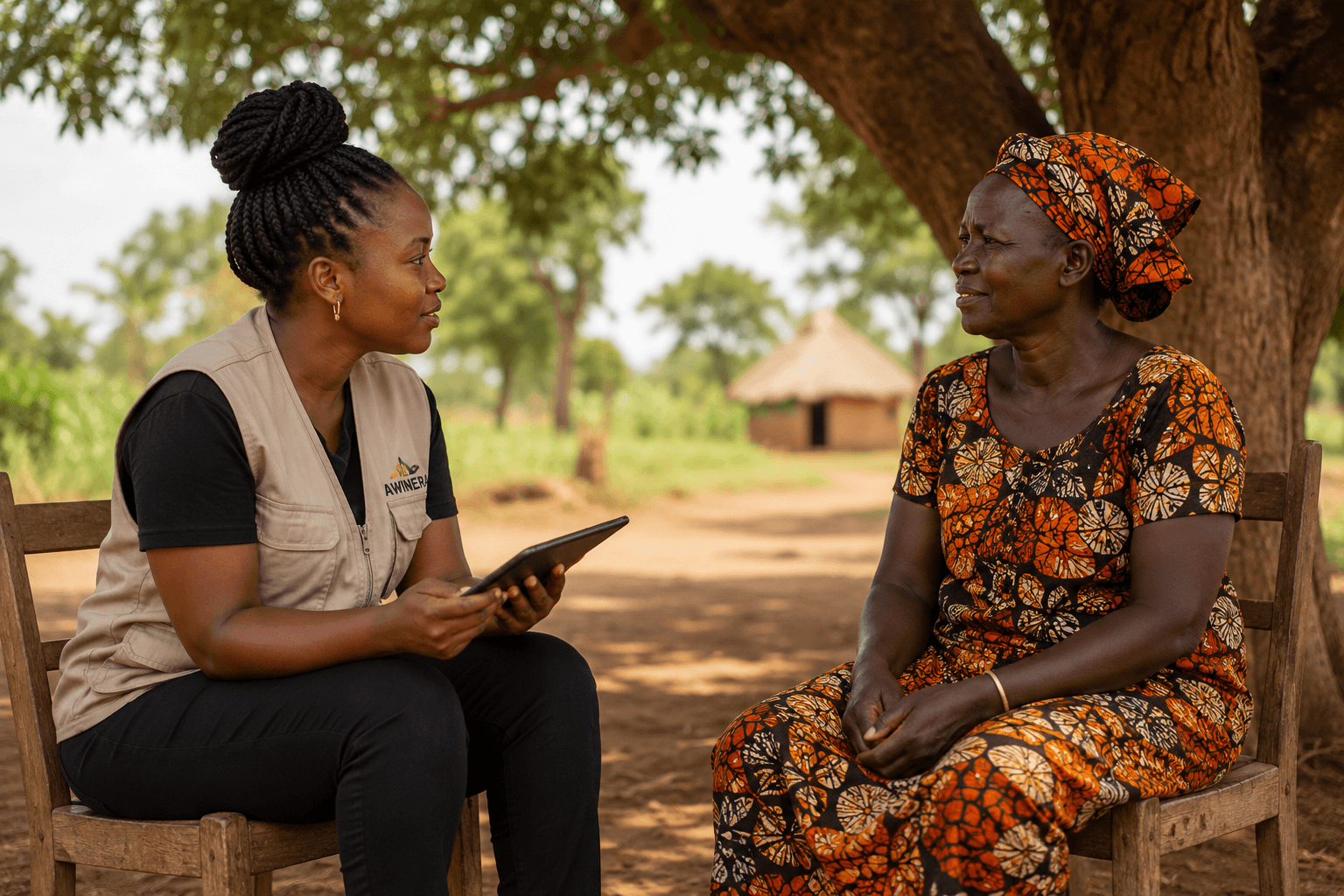
Our food security and nutrition research uses standardised measurement tools — including the Food Insecurity Experience Scale (FIES), Women's Dietary Diversity Score (WDDS), and Household Dietary Diversity Score (HDDS) — alongside rigorous impact evaluation methods. We study both the drivers of food insecurity and the effectiveness of interventions across the food system, from production to consumption.
What We Do
Key Interventions
Research Outputs
Publications(2)
Field Work
Projects(5)
Evaluation of NUSAF3 Economic Inclusion Interventions
Validating Resilience Metrics for Food Security and Women's Dietary Diversity During COVID-19 in Uganda
Do Demand-Driven Agricultural Extension Policies Improve Nutrition Outcomes?
Monthly Price Monitoring and Analysis of Maize and Rice in East Africa
Do Adaptation Strategies to Climate Change Impact Food and Nutrition Security in Sub-Saharan Africa?
Commission Research
Work with us on Food Security & Nutrition
Partner with AWinERA to commission impact evaluations, market research, or advisory services.
Get in Touch