

Do Demand-Driven Agricultural Extension Policies Improve Nutrition Outcomes?
Overview
Panel survey-based study investigating the link between participatory extension approaches and household nutrition outcomes in Uganda.
Research Objectives
Assess whether demand-driven agricultural extension policies increase uptake of improved farming practices among smallholder households
Measure the effect of targeted extension services on household dietary diversity and nutritional outcomes
Examine gender-differentiated impacts on women's decision-making over food production and dietary choices
Generate evidence to inform the design of nutrition-sensitive agricultural extension programmes in Uganda
Methodology
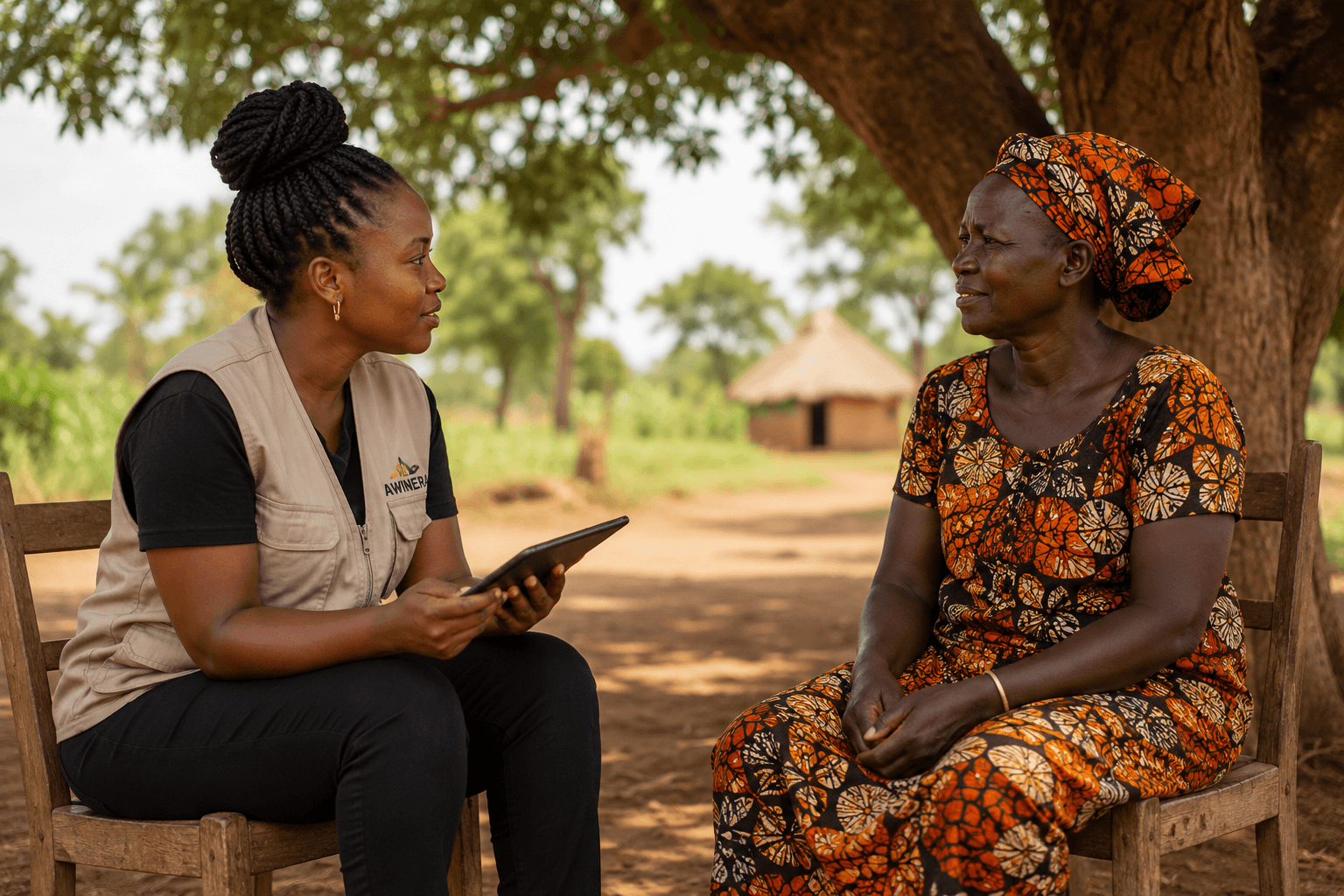
The study used a randomised controlled trial (RCT) design with treatment and control groups across multiple districts in Uganda. Household surveys were conducted at baseline and endline to capture dietary diversity scores, agricultural practice adoption, and women's empowerment indicators. Key informant interviews and focus group discussions supplemented quantitative data collection.
Key Findings
Demand-driven extension approaches significantly increased adoption of improved agricultural practices compared to supply-driven models. Households receiving targeted extension services showed measurable improvements in dietary diversity scores, with particularly strong effects among female-headed households. The findings informed national extension policy reform discussions with the Ministry of Agriculture, Animal Industry and Fisheries (MAAIF).
Request the full research reportThematic Areas
More Projects
View all →Leveraging Contract Farming to Improve Refugee Resilience in Uganda
AWinERA Africa Ltd
Evaluation of NUSAF3 Economic Inclusion Interventions
NUSAF, World Bank
Gamified Savings as a Problem Gambling Intervention
Network of Impact Evaluation Researchers in Africa (NIERA)